Table of Contents
- Introduction
- The path to net-zero
- Decarbonization strategy, action plan, and scenario analysis
- Outlook: Product Carbon Footprint, CO2-neutral products, and Life Cycle Assessments
- Summary
- References
Introduction
With the tightening of the Climate Protection Act in the summer of 2021, the German government is setting the cornerstones for the decarbonization of the economy: The Federal Republic of Germany, and thus the entire German economy, must become greenhouse gas neutral by 2045. By 2030, emissions must be reduced by at least 65% (compared to the base year 1990) and by 88% by 2040 (German Federal Government, 2022). By 2030, these reduction targets were also divided into sectors: For the ‘Industry’ sector, a reduction target of 58% applies by 2030 (German Environment Agency, 2022).
For companies, this means: The long-term goal of a company in measuring, recording, and reducing greenhouse gas emissions must always be the ‘climate neutrality’ of the company. The urge to act here is great, not only due to the upcoming national sector targets for 2030 – the sooner action is taken, the sooner net-zero can be achieved and the more surmountable the challenges become.
In the first two articles of the blog series, an overview of the CSRD, existing frameworks, and their requirements, especially regarding climate protection, was given. Against the background of these requirements and the German greenhouse gas reduction targets, this article answers the question of how the path to decarbonization of a company is structured and what sequence of steps is required.
Climate Neutrality versus Greenhouse Gas Neutrality: What is the Difference?
In recent years, the term ‘climate neutrality’ has gained considerable importance. More and more companies, cities, and countries are setting ambitious net-zero targets. By 2021, 70% of the world economy was already covered by such promises. But what does climate neutrality actually mean? And what is the difference to greenhouse gas neutrality or the net-zero target? The Intergovernmental Panel on Climate Change (IPCC) and the German Environment Agency define the terms as follows:
- Climate neutrality: “Concept of a state in which human activities have no net effect on the climate system. […]” (IPCC, 2018; Sieck/Purr, 2021)
- Net-zero emissions / Greenhouse gas neutrality: “Net zero emissions are achieved when anthropogenic greenhouse gas emissions (e.g. CO2, CH4) are globally offset by anthropogenic removals over a specified period.” (Sieck/Purr, 2021)
It becomes clear that greenhouse gas neutrality is a prerequisite for climate neutrality. A company can achieve greenhouse gas neutrality, but not necessarily climate neutrality, as it only concerns the temporary net-zero state and not the consequences of human activities. When talking about ‘climate-neutral products’ or ‘climate-neutral companies’, greenhouse gas neutrality is usually meant. Some companies are unable to formulate climate neutrality as a goal due to their size and potential impact, but only greenhouse gas neutrality. It is of fundamental importance how companies achieve net-zero emissions in order to make a serious, long-term contribution to combating climate change.
The Path to Net-Zero
The Corporate Carbon Footprint
On the path to decarbonizing a company, the greenhouse gas balance is the basis for all further analyses, the decarbonization strategy, and the action planning. It represents a basic building block of sustainability management. A Corporate Carbon Footprint is a balance of all direct and indirect greenhouse gas emissions of a company and its value chain.
Procycons uses the Greenhouse Gas (GHG) Protocol of the World Resource Institute and the DIN ISO 14064-1 standard of the International Organization for Standardization for the calculation, which are considered the most internationally recognized standards for the greenhouse gas accounting of companies.
In addition to carbon dioxide (CO2), according to the ISO standard 14064-1, all other greenhouse gas-relevant emissions must also be included in the calculation when creating a CCF, such as methane (CH4) and nitrous oxide (N2O) (DIN, 2019). According to the GHG Protocol, the collection of greenhouse gas emissions takes place in three so-called scopes (WRI, WBCSD, 2004):
Scope 1: Direct emissions from internal company processes
Scope 2: Indirect emissions from energy consumption
Scope 3: Indirect emissions (upstream and downstream value chain)
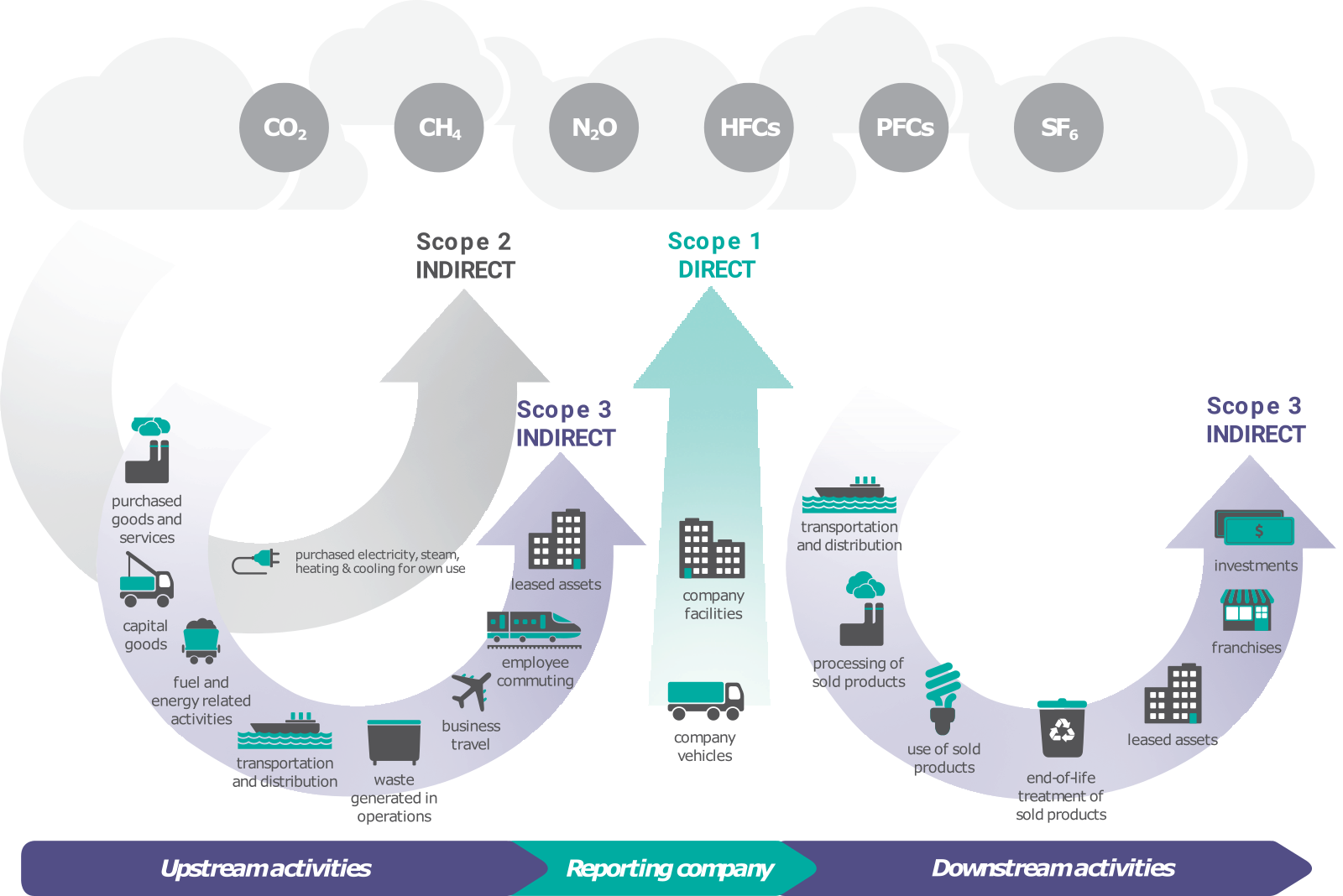
Figure 1: GHG Scopes 1-3; Source: Excerpt from the GHG Protocol
The collection of emissions from Scope 3 companies poses major challenges. While a company has the least control over Scope 3 emissions, these emissions are usually the biggest lever for avoidance and reduction, as they often account for the largest share of the greenhouse gas balance, especially for manufacturing companies.
At Procycons, the creation of a CCF takes place in five steps:
1. Analysis of the company structure and identification of important stakeholders
In the first step, the company structure and business activities are analyzed with a view to the aspects relevant for a CCF. Climate reporting is also relevant for external stakeholders, such as business and end customers, legislators, investors, owners, etc., via internal communication and strategy development. These stakeholders are identified in advance together with the company.
2. Definition of the boundaries of responsibility
The definition of the boundaries of responsibility determines the scope of the CCF investigation. Here, in particular, the question arises for which activities, product life cycle steps, and emissions of the upstream and downstream value chain (Scope 3) the company sees itself responsible for, or which activities should be included in the calculation of the greenhouse gas balance. In addition, it is defined which greenhouse gases are included in the balance.
3. Balancing of the greenhouse gas emissions of the three scopes
In order to balance greenhouse gas emissions, data must first be collected – internally and from stakeholders. For example, information from suppliers on distances, weights, and transport types must be obtained to calculate transport emissions in the upstream value chain.
By assigning this data to emission data from recognized, standardized databases (e.g. ecoinvent, ProBas, and Defra), emission values for the balancing can then be calculated. This process is carried out for the activities of all three scopes and all relevant greenhouse gases. The calculated values are professionally checked for relevance, completeness, consistency, coherence, accuracy, and transparency.
4. Analysis and preparation of the results
The greenhouse gas balance is finally analyzed and emission hotspots are identified. In addition, the results are visually prepared in a transparent and authentic manner and put into writing for the relevant stakeholders defined in advance (e.g. in the form of a sustainability report). The balance and its analysis serve as the basis for the development of a decarbonization strategy and an action plan for emission reduction (see steps 2 and 3).
5. Certification of the greenhouse gas balance
If the company wishes, Procycons has the CCF certified by an external auditing company (e.g. GUTcert or TÜV). On the one hand, certification ensures the reliability of the information provided and, on the other hand, increases integrity and transparency towards stakeholders.
Basic Principles for the Path to Net-Zero: What are Science Based Targets?
In order to limit global warming to 1.5°C, the Science Based Targets initiative (SBTi) sets out basic principles according to which companies can set net-zero targets. In contrast to simple net-zero targets, science-based targets require a decarbonization path based on climate science. Companies that want to make a significant contribution to reducing climate change should rely on science-based targets. The Carbon Management Hierarchy of Andrews (2014) suggests that carbon sequestration should only be considered as a last resort. The SBTi basic principles make the foundations of climate science tangible and implementable to support companies in climate management.
Decarbonization Strategy, Action Plan, and Scenario Analysis
The development of the decarbonization strategy is based on an internal analysis of the strategic starting position and an external analysis of the business environment. When evaluating these analyses and developing strategic goals, a balance between economic framework conditions and ecological requirements is strived for.
In addition to determining customer needs, a technology trend analysis is part of the internal analysis, in which new technologies are examined for their relevance with regard to the sustainability performance and the business activities of the company. In the external analysis, it is checked to what extent the company is affected by current and future political and legal framework conditions (e.g. Supply Chain Due Diligence Act, Federal Climate Protection Act, Circular Economy Act). On the other hand, a competitive analysis is carried out using ESG criteria.
Based on these strategic investigations, the action plan and the scenario analysis are developed, which pave the way for the decarbonization of the company. The overriding goal is to evaluate which measures are ecologically sensible and economically viable in order to achieve corporate greenhouse gas neutrality. The Carbon Management Hierarchy according to Andrews and the principles and conceptual foundations of the Science Based Targets Initiative (SBTi) are of essential importance.
For the creation of a measures long list, it is necessary to examine every sub-area of all three scopes in the company’s climate balance for reduction potentials (see Figure 1). These measures are then examined for their feasibility and prioritized according to their effectiveness and efficiency. The resulting short list is finally bundled in various decarbonization scenarios.
The result is a roadmap with various scenarios for quantitative, binding, and realistic greenhouse gas reduction targets that correspond to the fulfillment of the German government’s climate targets and thus to compliance with the Climate Protection Act.
Outlook: Product Carbon Footprint, CO2-Neutral Products, and Life Cycle Assessments
A company that has recorded its Corporate Carbon Footprint and developed strategic measures to achieve greenhouse gas neutrality has set important cornerstones for the ecological transformation of its business activities.
In the long term, after the establishment of this overarching strategy, the product portfolio must be ecologically optimized. The procedure here is similar to the decarbonization of companies: First, a Product Carbon Footprint (colloquially ‘CO2 footprint’) is recorded. This determines the greenhouse gas emissions or the global warming potential of a product over its entire life cycle – from raw material extraction and processing, to transport, production, and use, to recycling or disposal. After hotspots have been identified in the greenhouse gas balance, all processes have been optimized, and CO2 reductions have finally been achieved, the aim can be to have the product certified as greenhouse gas neutral by CO2 compensation of the remaining emissions.
A more holistic approach is offered by the Life Cycle Assessment (or LCA). Methodologically, the procedure is similar to the Product Carbon Footprint, but now several impact categories or environmental impacts are considered. These can be, for example, the contribution to acidification, eutrophication, or ozone depletion.
Summary
The blog series aimed to break down sustainability reporting and decarbonization from the macro level of the EU (CSRD) to implementation at the company level. The first article gave an overview of the upcoming changes in sustainability reporting for companies due to the CSRD and the frameworks available for this purpose. The second article focused on the three frameworks recommended by Procycons, DNK, GRI standards, and ESRS, and went into more detail on their ecological and climate-relevant requirements. Against the background of these climate-relevant requirements and the Climate Protection Act of the Federal Republic of Germany, the third article described step by step how Procycons accompanies companies on the path to decarbonization.
The CO2 clock of the Mercator Research Institute on Global Commons and Climate Change (MCC) shows the urgency of the ecological transformation: If CO2 emissions remain constant, the CO2 budget for meeting the 1.5 °C target will be used up in less than 7 years (as of February 22, 2023) (MCC, 2023). The resulting timeframe is significantly tighter than the time pressure that results from complying with legal obligations. There is no way around a greenhouse gas neutral economy. To achieve this goal, every company can make a valuable contribution by decarbonizing its activities in a timely manner.
References
- Andrews, J. (2014): Greenhouse Gas Emissions Inventory Reports: FY 14 Briefing. The Sustainability Institute. 66, [online]. https://scholars.unh.edu/sustainability/66 (accessed on 28.11.2022).
- Bundesregierung (2022): Klimaschutzgesetz. Generationenvertrag fürs Klima, [online]. https://www.bundesregierung.de/breg-de/themen/klimaschutz/klimaschutzgesetz-2021-1913672 (accessed on 28.11.2022).
- DIN Deutsches Institut für Normung e. V. (2019): Treibhausgase–Teil 1: Spezifikation mit Anleitung zur quantitativen Bestimmung und Berichterstattung von Treibhausgasemissionen und Entzug von Treibhausgasen auf Organisationsebene (ISO 14064-1: 2018).
- IPCC, 2018: Annex I: Glossary [Matthews, J.B.R. (ed.)]. In: Global Warming of 1.5°C. An IPCC Special Report on the impacts of global warming of 1.5°C above pre-industrial levels and related global greenhouse gas emission pathways, in the context of strengthening the global response to the threat of climate change, sustainable development, and efforts to eradicate poverty [Masson-Delmotte, V., P. Zhai, H.-O. Pörtner, D. Roberts, J. Skea, P.R. Shukla, A. Pirani, W. Moufouma-Okia, C. Péan, R. Pidcock, S. Connors, J.B.R. Matthews, Y. Chen, X. Zhou, M.I. Gomis, E. Lonnoy, T. Maycock, M. Tignor, and T. Waterfield (eds.)]. Cambridge University Press, Cambridge, UK and New York, NY, USA, pp. 541-562, doi:10.1017/9781009157940.008. (accessed on 28.11.2022).
- Mercator Research Institute on Global Commons and Climate Change (2023): Verbleibendes CO2-Budget, [online]. https://www.mcc-berlin.net/forschung/co2-budget.html (accessed on 22.02.2023).
- Science Based Targets initiative (2020): Disclosure insight action foundations for science-based net-zero target setting in the corporate sector, [online]. https://sciencebasedtargets.org/resources/files/foundations-for-net-zero-executive-summary.pdf (accessed on 28.11.2022).
- Sieck, L.; Purr, K. (2021): Treibhausgasneutralität in Kommunen. Umweltbundesamt, [online]. https://www.umweltbundesamt.de/sites/default/files/medien/376/publikationen/2021-03-24_factsheet_treibhausgasneutralitaet_in_kommunen.pdf (accessed on 28.11.2022).
- Umweltbundesamt (2022): Treibhausgasminderungsziele Deutschlands, [online]. https://www.umweltbundesamt.de/daten/klima/treibhausgasminderungsziele-deutschlands#undefined (accessed on 28.11.2022).
- World Resources Institute and World Business Council for Sustainable Development (2004): The Greenhouse Gas Protocol: A Corporate Acounting and Reporting Standard. https://ghgprotocol.org/sites/default/files/standards/ghg-protocol-revised.pdf (accessed on 28.11.2022).